Lesson 2 · 8:33
How AI search actually works
The four steps ChatGPT takes before it answers, and the NAMED framework.
Summary
Four steps to an answer
Take a shopper who asks for the best moisturiser for oily skin under 500 pounds. Before it replies, AI decides whether to search at all, breaks the question into smaller searches, reads the pages it finds, and writes its answer from what the sources it cites agree on.
1. It decides whether to search
Not always. Researchers studied more than 700,000 real ChatGPT conversations. For coding, maths and languages, it mostly answered from what it already knew. For shopping, travel, weather and events, it went to the web far more often. Those are the buying questions that bring traffic and sales.
2. It breaks the question down
AI doesn't search the shopper's exact sentence. It splits it into parts and searches each one, such as "oil-free moisturiser for hot climates", "moisturiser under 500 pounds in Egypt" and "best moisturiser for oily skin reviews". ChatGPT runs about three searches per question. Your page doesn't have to win them all. It has to answer at least one.
3. It reads, then chooses what to cite
For one search, ChatGPT reads about 43 pages on average and cites about 4. It first judges each result by its title and description, which is why both still matter. Then it opens the pages that look like a match and looks for the one part that answers the question. It doesn't read top to bottom the way a person does.
What makes a page easy to cite
Three things. It's extractable: the answer is short, clear and stands on its own under a good heading, not buried in a long paragraph. It's fresh: AI leans towards recently updated content. It's authoritative: well-known, trusted sites are cited more often than the rest.
4. It writes from what the sources agree on
The answer is built from the consensus across the pages it cited. AI also draws on memory, meaning what it learned in training from everything written about you over the years. In the same study, 15 to 20% of the claims in AI answers had no source page at all. Memory changes slowly, with each new model. Live search changes every day. Both count, but live search is where to start.
The NAMED framework
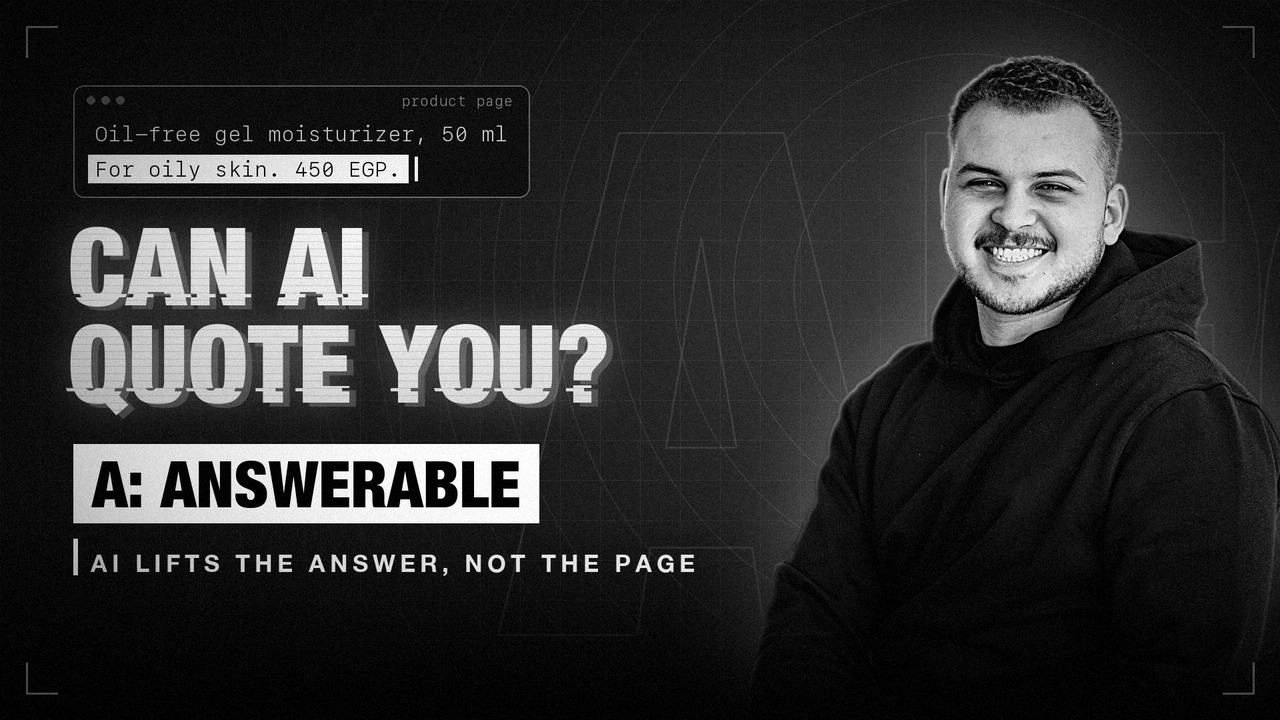
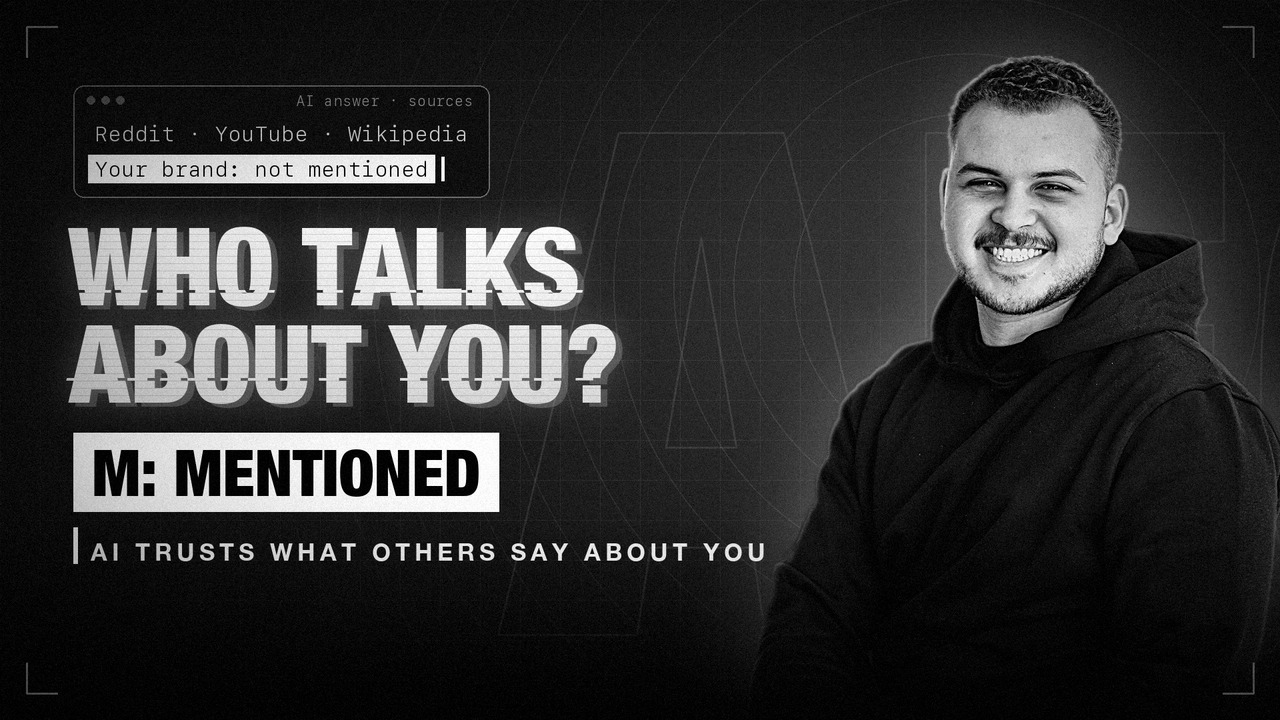
AI reads dozens of pages and names only a few. To be one of the few, a brand has to pass five checks. Navigable: can AI reach and read your pages? Answerable: can it pull a clear answer from them? Mentioned: do trusted sources talk about you? Exact fit: are you the best answer to this exact question? Durable: do you stay named week after week? Miss any one and you drop out of the answer.
SEO is where it starts
Good SEO already covers the first two checks: pages that can be crawled, are indexed, are clearly written and aren't blocked. Google says normal SEO best practices still apply to its AI features, and OpenAI says much the same. One study of Google's AI Overviews found that cited brands got two to five times more organic clicks than brands that weren't cited. That shows the two go together, not that one causes the other.
Key takeaways
- 01
Does AI always search the web?
No. For coding or maths it answers from memory. For shopping, travel and events it searches live, and that's where buying decisions happen.
- 02
How does it search?
It breaks one question into several smaller searches, about three on average in ChatGPT. Your page doesn't have to win them all, only one.
- 03
How does it decide what to cite?
ChatGPT reads about 43 pages per search and cites about 4. It judges each result by its title and description first, then looks inside the page for the part that answers the question.
- 04
What makes a page easy to cite?
A short, clear answer under a good heading, content that's kept up to date, and a source AI already trusts.
- 05
Is SEO still relevant?
Yes. Pages that are crawlable, indexed and clearly written cover the first two NAMED checks. AEO builds on SEO; it doesn't replace it.
FAQs

Your instructor
Youssef Abolatta · Founder, Hopkins
Youssef is the founder of Hopkins, the AI visibility platform that measures how ChatGPT, Gemini, Perplexity, Claude and Google's AI recommend online stores. He works hands-on with e-commerce brands on answer engine optimisation, turning what AI assistants say about them into traffic and sales, and built the NAMED framework from thousands of measured AI answers.
Follow on LinkedInRelated lessons
0:00So how does AI search actually work? It's the question everyone is asking right now. To answer it properly, we need to first see what actually happens when someone asks AI a question. So in this video, I'm going to be walking you through how AI builds and answers step by step. And by the end, you will know exactly where your AEO strategy is going to fit and where it stops being just enough. So to understand very quickly, if a user goes and, let's say, types, what is the best moisturizer for oily skin under, let's say, 500 pounds?
0:37So there are four steps that the AI makes in order for it to decide the answer that it's going to make. First, the AI decides whether it needs to research at all or just gather from its own data. Second, it does the prompt breakdown where it breaks the question into smaller searches. Third, it reads the pages. It finds the pages that it wants to cite. And fourth, it writes the answer based on the consensus from this cited sources.
1:08Let's take them all each one at a time. Starting with the web search. So does AI make a search? Well, not always. Researchers studied more than 700,000 real ChatGPT conversations. For topics on coding, math, languages, it mostly answers from what it already knows.
1:31But for topics related to shopping, travel, weather, and events, it goes to the web directly. Far more often than you actually think. And that's good news for you as a marketer where you want to focus on buying questions that actually convert traffic to your website and as a result, sales. And this is where you're going to show up. To start here, let's actually understand the second step that is happening. The prompt breakdown.
2:02AI doesn't just search your customer's exact sentence. When a user asks best moisturizer to buy, it splits the prompt into parts and searches each one on the internet. Here, that might be one of these three options that you see here. Oil-free moisturizer for hot climate, moisturizer under 500 pounds in Egypt and best moisturizer oily skin reviews. And ChatGPT, that's about three searches per question on average. And here's the key point here.
2:38Your page doesn't have to win them all, but it at least have to answer one of these questions. The third step that the AI makes is reading the results from the questions. For one search question, ChatGPT reads about 43 pages on average, but it only on average chooses to cite about four. And you want to be one of those four cited pages, of course. So most of what it reads never makes it into the answer. And notice that there are two ways to show up here, which is actually a mention when AI names your brand and a citation is when it's linked to your own page as a source.
3:16And you want to be there on both sides so that you're always inside of the answer. But they don't usually come along together. So how does AI actually decides what it is going to cite? So there are actually four steps which helps the AI decide the pages that it's going to decide. First, it scans for the internet based on the prompt breakdown that I showed you previously. It looks at each results title and description and asks, does this page answer the question?
3:48That's why your title, tag and meta description still matter here. And they need to be optimized for the AI. They're the first thing AI sees to judge, what your page is about. Secondly, it opens the pages that look like a match. And then it looks inside each page for the part that actually answers the question. It doesn't read top to bottom like a person.
4:13It looks for a clear chunk it can use. And lastly, it picks the easiest answer to use and cites it. Three things make a page easy to cite. It's being extractable, that the answer is clear, short and actually stands out on its own under a good heading, not buried in a long paragraph and that it's fresh. AI models leans toward recently dated content so keep your pages updated all the time. And also it's important that it be authoritative.
4:42AI cites well-known trusted sites more often than the rest of the results. So if you want to be cited, make sure that your answer is the easiest one to find out and the most recent as well. And there's a lot more details and we'll get into that in the future videos as well. So there are actually two ways for which the AI knows you. First, it looks on the memory part of it. So the AI actually is trained on a large amount of memory and has a lot of memory.
5:15First is the memory, what it learned from training, from everything written about you over time. This changes slowly with each new model. The second is actually live search. The pages it reads right now for this exact question and what changes every day, both actually matter. In the same study, 15 to 20% of the claims in AI answers had no sources page at all. They came directly from memory.
5:42So what's been said about you over the year counts as well and it helps you become more integrated into the answer across a long period of time. But first, you need to be showing up inside of the live search. So we've actually inside of Hopkins developed a framework which you can use to understand why you're not showing up inside of AI search and where exactly are you falling? If AI reads dozens of pages and names only a few, the real question is how do you become one of the few? Your brand needs to be named by AI and that's exactly what this framework is built around. It's built around five steps.
6:29Inside of these five steps, we call it the NAMED framework. Five checks between your brand and the AI answer. N is for being navigable. Can AI actually reach and read your pages? Then, answerable. Can it pull a clear answer from them?
6:51Third is M for mentioned. The trusted sources talk about you and E is exact fit. Are you the best answer to this exact question? And D is being durable. Do you stay named week after week? Miss any of those and you drop out of the answer.
7:11We'll go through them in more details but you need to understand that if you use this framework correctly, I ensure you that you will definitely show up inside of AI answer on the prompts that you care most about. So if you look about the NAMED framework, you can actually divide it into two sections. First, the basic foundational SEO and the other three parts are actually focused more towards AEO. So the question everyone is asking is whether SEO right now is dead and whether we should only focus on AEO, no actually SEO is where the NAMED framework starts from. Good SEO covers the first two parts, which is the N and the A. Your pages can be crawled, they're indexed and they're clear.
7:59Nothing is blocking them and you're not blocking the AI either. Google says normal SEO best practices still apply to these features. But OpenAI says the same thing in its own way. Does getting into the answer actually pay off in the end? One study of Google's AI overview found that brands that were cited got two to five times more organic clicks than brands that were not. To be fair, that shows the two go together.
8:24Not that one causes the other, but it's the strongest time of where you want to be.